Secondary Progressive MS (SPMS): Symptoms & Home Care Support
Secondary progressive multiple sclerosis (SPMS) develops out of relapsing-remitting MS as accumulated nerve damage begins to outpace the body ability to recover. Without disease-modifying therapy, roughly half of RRMS patients transition to SPMS within 10 to 15 years; modern DMTs appear to delay this transition, though the magnitude of the delay is still being studied. In SPMS, disability worsens steadily over time, and this progression is now understood to happen largely independently of relapses.
Typical SPMS Patient Profile
- Initial RRMS diagnosis followed by gradual transition (often 10-15 years post-diagnosis without DMT, longer with modern treatment)
- Steady accumulation of disability over time
- Relapses become less frequent or stop entirely, but progression continues
- Mobility decline, increasing fatigue, more bladder/bowel symptoms, more cognitive symptoms
- Disease-modifying therapy options narrower than for RRMS (siponimod is FDA-approved for active SPMS)
Our Promise
If you choose us, here’s what we promise: clinical care delivered by people who know MS. A care plan built around your specific symptoms, your specific home, and your specific family. Honest answers about what Medicare covers and what it doesn’t. And the kind of communication that means you never feel like you’re chasing us for an update.
How Skilled Home Health Helps SPMS Patients : Secondary progressive ms
Maintenance Therapy Under Jimmo
SPMS is the paradigmatic case for Jimmo Settlement coverage. The disease by definition is progressive – improvement is not the goal. Maintenance – preserving function, slowing decline, preventing complications – is. Medicare covers this. Skilled PT for range of motion. OT for ADL maintenance. Skilled nursing for medication and symptom monitoring.
Symptom Management
As SPMS progresses, the symptom burden grows: increasing fatigue, mobility decline, bladder and bowel dysfunction, spasticity, cognitive symptoms. Home health addresses each through the appropriate clinical service.
Caregiver Support
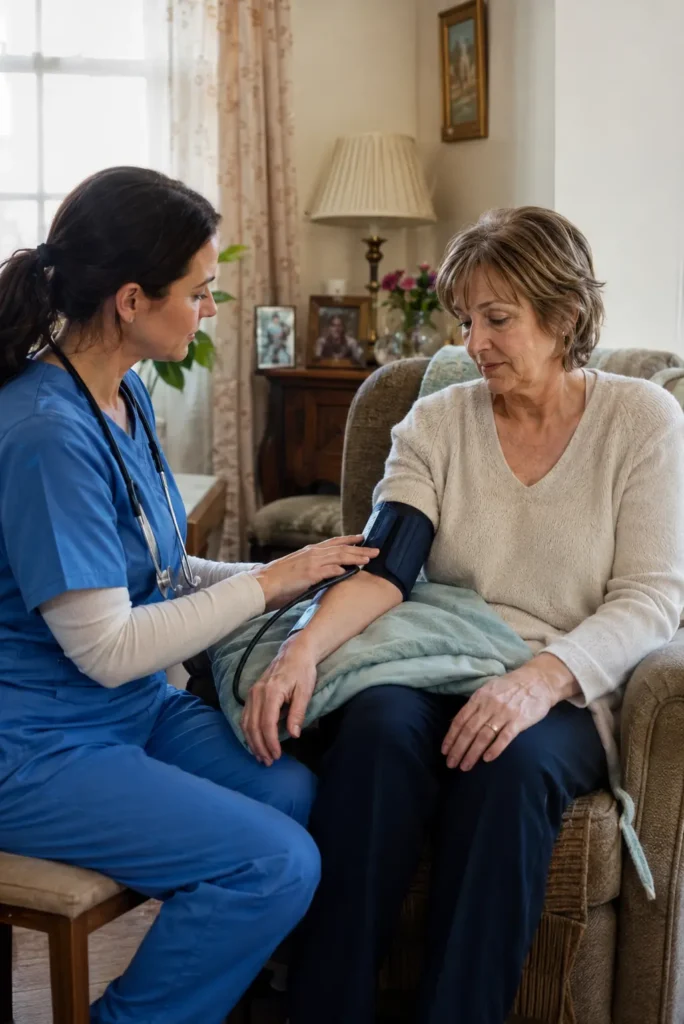
SPMS often outlasts caregivers ability to do everything alone. Aide services, social work coordination, and family education become foundational. Many SPMS patients have spouse caregivers who are themselves aging – supporting the caregiver becomes part of the care plan.
Hospital Prevention
UTIs, aspiration pneumonia, falls, and medication complications are the most common causes of SPMS hospitalization. Skilled nursing continuous monitoring catches these early. Many SPMS hospitalizations are preventable with good home health.
The transition from RRMS to SPMS is often not announced – it is recognized in retrospect. Patients and families notice that relapses have become less common but function continues to decline. The neurologist may eventually re-classify the disease. By the time the transition is formally recognized, it has often been happening for months or years.
This is one reason home health becomes important earlier than families expect. The clinical surveillance home health provides catches progression earlier than periodic neurology visits. We document changes – gait, fatigue, cognition, bladder function – and surface them to the treating physician. Earlier intervention with maintenance therapy preserves more function long-term.