MS Care for Seniors at Home: Specialized Support for Older Adults with MS
Multiple Sclerosis (MS) in seniors presents unique challenges that require specialized, coordinated care. Older adults living with MS often face progressive mobility issues, cognitive changes, higher fall risk, polypharmacy, and multiple chronic conditions such as diabetes, hypertension, and cardiovascular disease.
Whether aging with long-duration MS or diagnosed later in life with late-onset MS, senior patients benefit from comprehensive skilled home health services tailored to their evolving needs. Through medication management, fall prevention, cognitive support, caregiver assistance, and coordination with neurologists and specialists, home-based care helps seniors maintain independence, reduce hospitalizations, and improve quality of life while navigating the complexities of aging with Multiple Sclerosis in Florida.MS fatigue is not ordinary tiredness.
The Two Senior MS Populations
Long-Duration MS (Aged Into Senior Years)
Patients who were diagnosed decades ago and are now navigating MS in their 60s, 70s, or beyond. This population often has secondary progressive MS, significant accumulated disability, and a long history with neurology specialists. The care challenge is balancing decades of established treatment patterns with new aging-related considerations.
Late-Onset MS (Diagnosed After 50)
Patients diagnosed with MS in middle or older age. Late-onset MS represents about 10 percent of MS cases. Diagnosis is often delayed because clinicians don’t always consider MS in older adults – symptoms may be attributed to stroke, normal aging, or other neurological conditions. Late-onset MS more often follows a primary progressive course, with mobility loss as the dominant feature.
What's Different About MS in Seniors
Multiple Comorbidities
Older MS patients almost always have other chronic conditions – hypertension, diabetes, cardiovascular disease, osteoarthritis, osteoporosis, sleep apnea. Each comorbidity affects MS care, and MS affects each comorbidity. Medication interactions become more complex. Functional limits compound. The home health team coordinates across multiple specialists rather than focusing on MS alone.
Polypharmacy
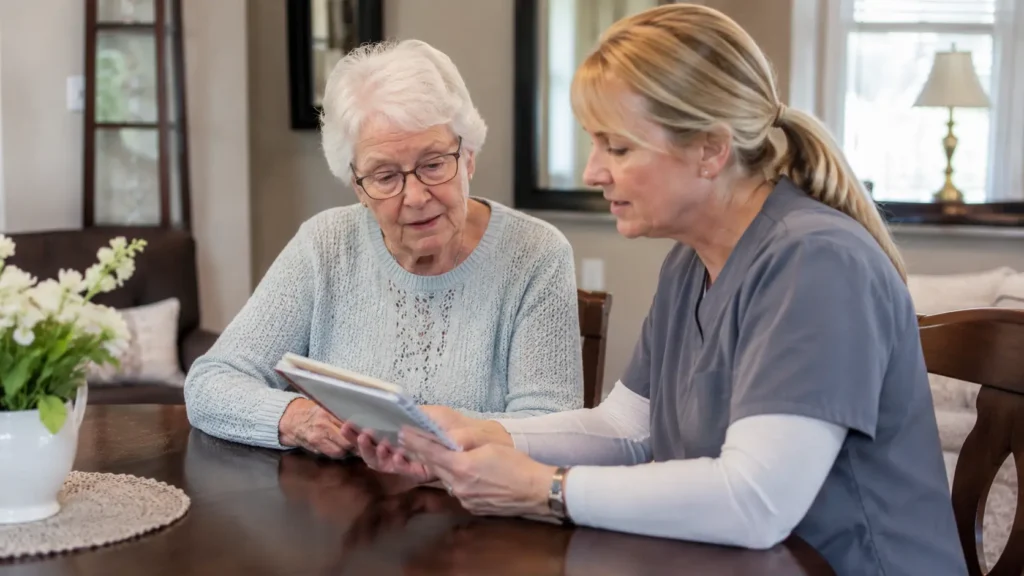
Older adults take more medications than younger adults, on average. MS patients take more medications than non-MS patients. The combination – older MS patients on disease-modifying therapies, antispasticity agents, anticholinergics for bladder, antidepressants, sleep medications, and treatments for non-MS conditions – creates real risk for interactions and side effects. Skilled nursing medication reconciliation is especially important.
Higher Fall Risk
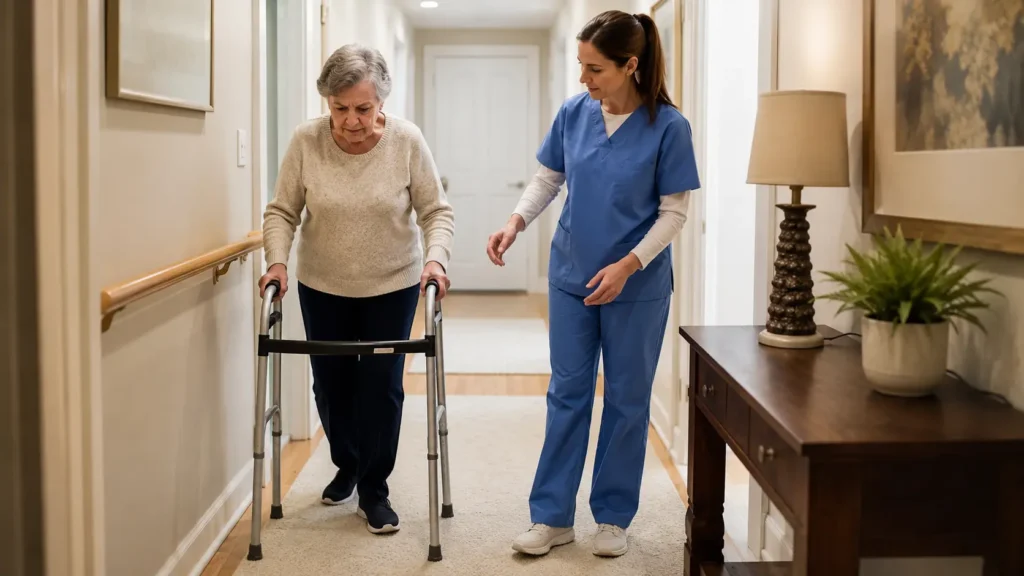
MS patients fall roughly three times more often than the general population. Older adults fall more than younger adults independently. Combine the two, and falls become a major safety priority. A single fall in an older MS patient can cascade into hip fracture, hospitalization, deconditioning, and permanent loss of independence.
Different Disease Activity
MS in older adults often shows less inflammatory activity (fewer relapses) but more progressive features. The disease-modifying therapies that work well for younger relapsing-remitting patients have less evidence in older patients. Treatment decisions become more individualized, often with input from neurology specialists balancing benefit against medication risk in older bodies.
Cognitive Considerations
MS cognitive symptoms can overlap with normal aging changes and with other conditions like mild cognitive impairment or early dementia. Distinguishing what’s MS, what’s aging, and what may be a separate neurological condition requires careful clinical assessment. Our team coordinates with neurologists and primary care doctors to make sure cognitive changes get the right workup.

Coordination Across Multiple Specialists
Older MS patients often have a neurologist, a primary care doctor, a cardiologist, an endocrinologist, an ophthalmologist, and a urologist. Communication breaks down across this many providers. Our team serves as the connective tissue - documenting changes, sharing visit notes, and surfacing concerns that might otherwise fall through the cracks.
Family Caregiver Support
Senior MS patients often have aging spouses providing primary care, or adult children juggling caregiving with their own lives. Caregiver burden is high. Medical social workers connect families to resources, help navigate Medicaid and long-term care insurance, and coordinate with MS Focus Foundation grants. Aide services provide direct respite.
Florida has the second-largest population aged 65 and older in the United States. The combination of an aging population and the influx of retirees from northern states – many of whom were diagnosed with MS in their 30s or 40s and have been living with the disease for decades – creates a senior MS population unlike most other regions. Many of our patients arrived in Florida assuming the climate would help. The South Florida heat actually does the opposite – Uhthoff’s phenomenon makes the climate a year-round MS challenge.
This is where home-based skilled care has unique value. Senior MS patients who relocated for retirement often don’t have the established neurology relationships they had up north. Our team helps build that network here, coordinating with South Florida neurology centers and serving as the consistent clinical presence as new specialist relationships form.
Eligibility for Senior MS Patients
Medicare home health eligibility is the same for seniors as for younger patients: physician's order, face-to-face encounter, skilled need, and homebound status. Most senior MS patients meet these criteria readily. Senior patients also tend to have established Original Medicare or Medicare Advantage coverage, simplifying intake.
Better outcomes at home.
For senior MS patients with care needs that exceed Medicare home health, we help families combine Medicare with:
- Medicare Supplement (Medigap) plans for additional services
- Florida Medicaid Statewide Medicaid Managed Care Long-Term Care (LTC) for eligible low-income seniors
- Long-term care insurance benefits
- VA Aid & Attendance benefits for veterans and surviving spouses
- MS Focus Foundation Homecare Assistance Grants
- Private-pay home care services
Our medical social worker is the person who pulls these resources together when needed.
Starting Care for a Senior MS Patient
From your first call, we verify your Medicare or Medicare Advantage coverage, coordinate with your physicians, and have an RN at your home within 24 to 48 hours. The intake process is simple, the documentation is rigorous, and we work directly with your existing care team.