MS Skin Care & Pressure Sore Prevention: Home Nursing
MS skin care home nursing is one of the most clinically consequential services skilled nurses provide for advanced MS patients. Pressure injuries (also called pressure ulcers, pressure sores, or bed sores) are a leading cause of MS hospitalization, bone infection, sepsis, and death. They are also among the most preventable complications in MS care – when skilled nurses intervene early and consistently, pressure injuries can almost always be prevented or stopped at the earliest stage.
This page covers why MS patients are at elevated risk for pressure injuries, what skilled home nursing does to prevent them, what wound care looks like when prevention is too late, and the critical role of family caregiver education in long-term skin health.
Why MS Patients Are at High Risk for Pressure Injuries
Several factors converge to make pressure injuries common in MS:
- Immobility – patients who cannot reposition themselves accumulate pressure on bony prominences
- Sensory loss – MS sensory symptoms can mean patients do not feel the discomfort that would normally prompt repositioning
- Spasticity and contractures – create constant pressure on the same skin areas
- Incontinence – moisture damages skin integrity
- Poor nutrition – common in advanced MS, weakens skin
- Cognitive symptoms – may impair self-awareness of skin issues
- Wheelchair use – constant pressure on ischial tuberosities and coccyx
- Friction from transfers – skin tears, blisters, and pressure damage
The combination of these factors in advanced MS creates a cumulative risk that requires active management. Without intervention, the question is rarely whether pressure injuries will develop but when.
Common Pressure Injury Locations in MS
- Sacrum (lower back) – the most common site in bed-bound and chair-bound patients
- Coccyx (tailbone) – common in wheelchair users
- Ischial tuberosities (sit bones) – prolonged seated pressure
- Trochanters (hip bones) – side-lying pressure
- Heels – bed-bound patients with limited leg movement
- Elbows – prolonged elbow pressure during transfers or positioning
- Ankles and feet – foot drop and contractures create pressure points
- Ears – prolonged side-lying
- Occiput (back of head) – bed-bound patients
Better outcomes at home.
Despite best prevention, some MS patients develop pressure injuries. When they do, skilled wound care provides:
- Stage assessment and documentation (Stage I, II, III, IV, unstageable, deep tissue injury)
- Appropriate dressing selection (hydrocolloid, foam, alginate, antimicrobial)
- Dressing changes at the frequency the wound requires
- Coordination with wound care specialists for complex wounds
- Negative pressure wound therapy (wound vac) when ordered
- Infection monitoring and early antibiotic coordination with physician
- Photography for documentation and physician communication
- Family education on home wound care techniques
Stage I and II pressure injuries can typically heal at home with consistent skilled care. Stage III and IV injuries may require surgical intervention, hospitalization, or specialized wound clinic care – but home health remains essential for ongoing management.
Many MS families assume that a visiting home health aide can handle skin care – bathing, positioning, basic care. This is partially true but dangerously incomplete. Home health aides provide essential daily care but cannot assess wound stages, recognize the early signs of pressure injury formation, recommend equipment changes, or coordinate medical interventions when problems develop.
The most expensive mistake in MS skin care is treating it as routine personal care rather than skilled nursing. Pressure injuries that could have been prevented with proper skilled nursing assessment cost Medicare hundreds of thousands of dollars in hospitalization, surgical intervention, and long-term wound care. They cost families incalculably more in suffering, fear, and the cascade of complications that often follow.
Skilled nursing skin assessment – the licensed clinical eye that catches the non-blanching redness, the temperature change, the early breakdown – is what prevents that cascade. This is one of the clearest cases in MS care where the difference between skilled nursing and personal care is the difference between prevention and crisis.
Better outcomes at home.
Better outcomes at home.
Skilled nurses train family caregivers to perform daily skin care between skilled visits. Training includes:
- How to perform daily skin inspection – what to look for, where to look, how to document
- Safe transfer techniques to prevent friction and shear injuries
- Repositioning techniques and schedules
- How to use pressure-relief equipment correctly
- Recognizing early warning signs and when to call the nurse
- Wound dressing techniques when applicable
- Incontinence-associated dermatitis prevention
This education extends the skilled nursing visit through the rest of the week. The most successful skin care protocols combine weekly skilled nursing assessment with daily family caregiver execution.
Skilled Nursing Prevention Protocols
Skin Assessment: Skilled nurses perform comprehensive skin assessment at every visit – typically using the Braden Scale or similar validated risk assessment tool. They document changes in skin condition, identify early warning signs (non-blanching redness, temperature changes, induration), and adjust the prevention protocol accordingly.
Repositioning Schedules
Bed-bound patients need repositioning every 2 hours; chair-bound patients need pressure relief every 15-30 minutes (small shifts, weight redistribution). Skilled nurses establish the repositioning protocol, train family caregivers, and verify execution.
Pressure-Relief Equipment Recommendations
- Pressure-relief mattresses (alternating pressure, low air loss)
- Wheelchair cushions (ROHO, Jay, Stimulite)
- Heel protectors and heel boots
- Foam wedges for side-lying positioning
- Hospital beds with positioning capability
Medicare often covers these as durable medical equipment when medically necessary. Skilled nurses help families document the medical necessity and navigate the DME approval process.
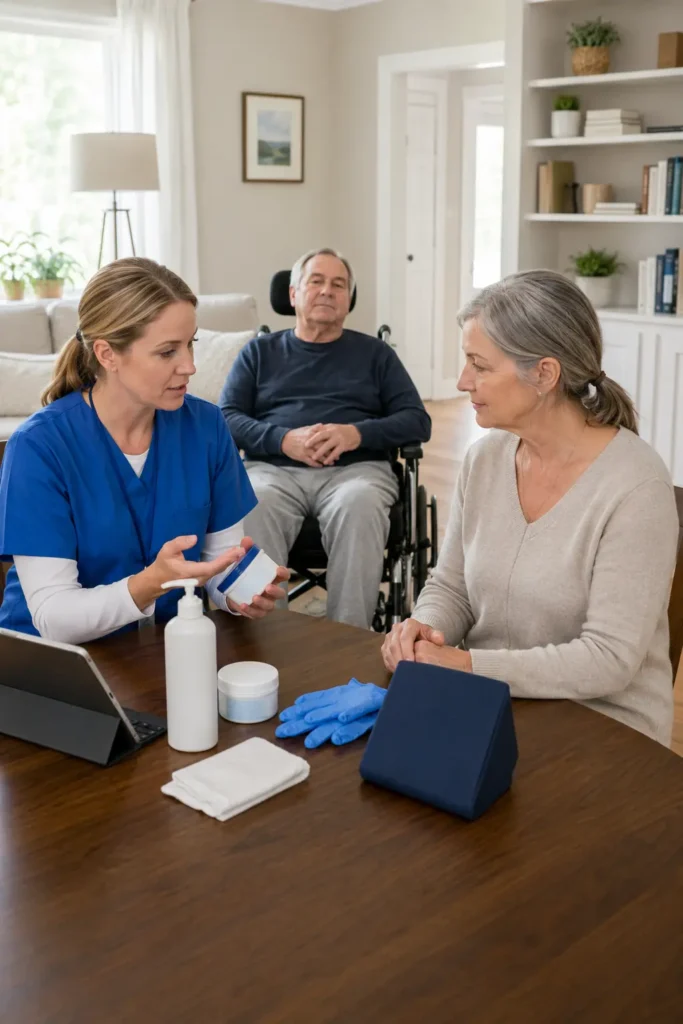
Skin Hygiene Protocols
Skin must stay clean and dry but not over-dry. Skilled nurses establish bathing schedules, recommend appropriate cleansers and moisturizers, manage incontinence-associated dermatitis, and address fungal infections in skin folds.
Nutritional Coordination
Adequate protein and calorie intake supports skin integrity. Skilled nurses coordinate with the medical social worker and physician for nutrition optimization, sometimes including supplementation when appropriate.
Eligibility and Cost
MS skin care and wound care provided as skilled nursing services are covered by Medicare at $0 copay for eligible patients meeting all four home health criteria. DME (pressure-relief mattresses, wheelchair cushions, hospital beds) is covered at 80% with 20% patient coinsurance after the Part B deductible.