
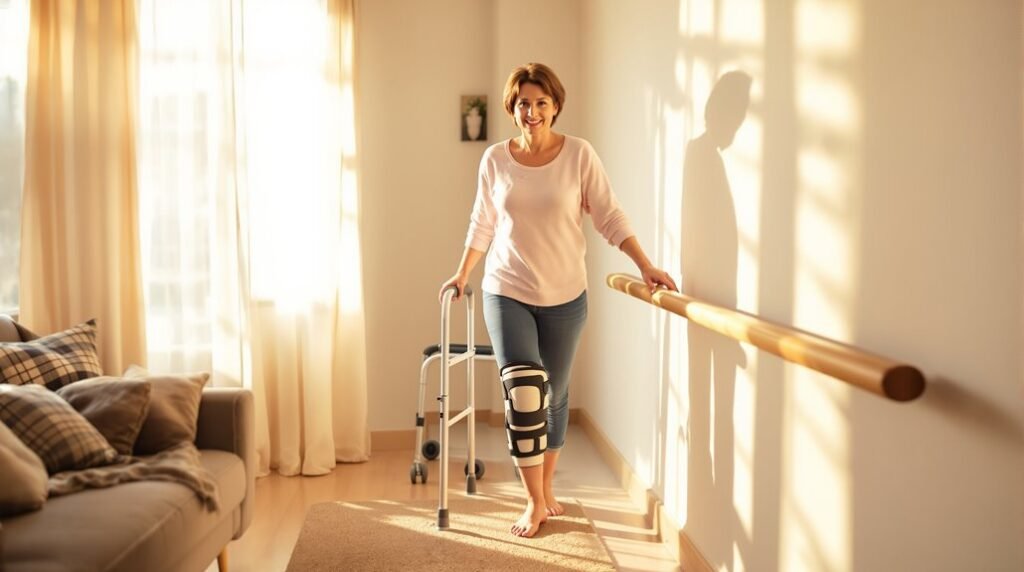
Falls affect up to 70% of people with MS within any six-month period, and they’re rarely caused by a single factor. MS disrupts the brain-body communication that controls balance, muscle strength, and coordination. Visual impairments, foot drop, cognitive fatigue, and urgency incontinence all compound your risk. Preventing falls means addressing both your physical environment and your neuromuscular deficits through targeted exercise and home modifications — and I’ll show you exactly how to do that.
Why Does MS Make Falling So Common?
Because MS disrupts communication between the brain and the body, it creates a cascade of physiological impairments that make falling far more common than in the general population.
Balance deficits, muscle weakness, visual impairments, foot drop, and cognitive fatigue are all documented risk factors that collectively elevate fall incidence in multiple sclerosis. Research indicates that 50%–70% of individuals with MS fall within any six-month period.
Environmental hazards—uneven surfaces, poor lighting—compound these intrinsic vulnerabilities. Additionally, urgency incontinence often prompts rushed movement, further increasing risk.
After a fall occurs, fear of falling frequently reduces activity levels, which worsens muscle weakness and perpetuates the cycle. Understanding these interconnected factors is foundational to designing effective physical therapy interventions and fall prevention programs.
How Fear of Falling Becomes Its Own Risk Factor
Among the psychological consequences of falling, fear stands out as a self-perpetuating risk factor that compounds the physical vulnerabilities already discussed.
In multiple sclerosis, fear of falling frequently emerges after a fall experience, prompting individuals to restrict physical activity. This restriction progressively erodes stamina and muscle strength, paradoxically increasing instability and fall likelihood.
Research confirms that fear itself alters movement patterns, introducing hesitancy that undermines safe mobility. As independence diminishes, emotional distress intensifies, deepening isolation and reducing quality of life.
Effective falls prevention must consequently address psychological barriers alongside physical ones. Targeted education and evidence-based interventions can interrupt this damaging cycle, equipping you to support individuals in reclaiming confident, safer movement rather than allowing fear to silently escalate their risk.
High-Risk Activities That Trigger Falls in MS
While fear-driven inactivity quietly erodes physical resilience, certain daily activities carry concentrated fall risk that you must recognize and address directly.
Walking, transferring, and rushing to the bathroom during continence urgency account for the majority of falls—affecting 50–70% of MS patients within any 6-month period.
Visual impairments like double vision compromise depth perception, while cognitive symptoms including poor concentration impair distance judgment on stairs or uneven terrain.
Environmental hazards, particularly slippery bathroom surfaces, intensify these MS symptoms considerably. High-risk behaviors—rushing or wearing inappropriate footwear—compound existing vulnerabilities.
Addressing these fall risk factors requires integrating assistive devices, modifying environmental hazards, and enrolling in a structured fall prevention program.
Recognizing which daily activities trigger falls transforms injury prevention from reactive to proactive.
Balance and Strength Exercises for MS Fall Prevention
Targeted strength and balance exercises directly counter the neuromuscular deficits driving fall risk in MS. By enhancing proprioception, reaction time, and core strength, you’re equipping your patients with measurable protective mechanisms against falls.
Physical therapy protocols incorporating tai chi, resistance training, and functional training—like sit-to-stand movements—demonstrate consistent reductions in fall incidents across multiple sclerosis populations. These approaches address fatigue and muscle weakness simultaneously, compounding their protective benefit.
I’d encourage you to extend these gains through structured home exercise programs that embed balance and strength training into daily routines, as consistent practice drives long-term adherence and sustained fall prevention outcomes.
Evidence supports that tailored, progressive exercise isn’t optional for your MS patients—it’s a clinical necessity for preserving their mobility and independence.
Home Modifications That Remove Common Fall Hazards
Beyond exercise interventions, five straightforward home modifications can meaningfully reduce fall risk for your MS patients.
First, removing clutter, throw rugs, and loose electrical cords eliminates common trip hazards from high-traffic pathways.
Second, improving lighting—including motion-sensor night lights—enhances visibility during high-risk nighttime bathroom trips.
Third, installing grab bars and non-slip mats in bathrooms provides critical stability during transfers, functioning as essential assistive devices.
Fourth, applying tape to mark step edges and room boundaries further improves visibility and spatial navigation.
Fifth, storing frequently used items at waist height prevents dangerous reaching and bending.
Each modification directly targets a documented fall mechanism, and I’d encourage you to conduct a structured home safety assessment with every patient to identify which hazards pose the greatest individual risk.
Assistive Devices That Lower Fall Risk in MS
Assistive devices represent a cornerstone of fall prevention for MS patients, and I recommend evaluating every patient’s need for them during routine clinical encounters.
Mobility aids like canes and walkers meaningfully improve balance and reduce fall risk by compensating for motor weakness. For patients experiencing foot drop, ankle-foot orthoses correct gait mechanics and stabilize positioning throughout the walking cycle.
Mobility aids and orthoses don’t just support movement — they actively reduce fall risk for MS patients.
Gait analysis helps healthcare providers identify which device best matches each patient’s functional deficits. Supportive footwear with firm soles further reduces fatigue-related falls while promoting independence.
Evidence consistently shows that multiple sclerosis patients who go without adaptive equipment face substantially greater falls risk. Regular reassessments guarantee device fit remains appropriate as the disease progresses, keeping falls prevention strategies both responsive and clinically effective.
When Should You Talk to Your Doctor About Falls?
Knowing when to seek medical guidance about falls is critical for MS patients, and I encourage you to speak with your doctor after any fall, given that over 50% of individuals with MS report falling at least once within a 3-month period.
Recurrent falls warrant immediate attention, as 30% to 50% of those who fall experience multiple incidents, signaling elevated risk requiring targeted prevention strategies.
Consult your healthcare provider if you notice changes in balance or mobility, as intrinsic factors—including muscle weakness, sensory loss, and cognitive impairment—significantly heighten fall risk in multiple sclerosis.
Discuss medication side effects that cause dizziness or drowsiness, and address any fear of falling, which reduces activity, weakens muscles, and compounds risk.
Your provider can recommend assistive devices and evidence-based interventions to protect you effectively.
Frequently Asked Questions
How Can You Prevent Falls in MS?
You can prevent falls by combining strength and balance training to improve stability and reaction time.
I’d also recommend modifying your home with grab bars and better lighting to eliminate hazards.
Consider using assistive devices like canes or walkers for added support.
Learning safe movement techniques empowers you to navigate daily activities confidently.
Joining community exercise programs sustains your long-term commitment to fall prevention, keeping you safer over time.
What Are the 5 P’s of Fall Prevention?
Like Florence Nightingale’s foundational nursing principles, the 5 P’s of fall prevention give you a structured framework to work with: Pain management, Position changes, Personal needs (toileting), Placement of essential items within reach, and Pumping of legs to maintain circulation.
I’d encourage you to apply these systematically with your MS patients, as addressing each “P” proactively reduces fall risk during vulnerable moments, particularly when fatigue and spasticity compromise their stability.
What Are 5 Ways to Prevent Falls?
- Strength & balance training reduces instability.
- Home modifications (grab bars, better lighting, less clutter) eliminate hazards.
- Assistive devices like canes or walkers improve mobility.
- Regular eye exams address vision impairments affecting spatial awareness.
- Fall risk education helps you develop emergency plans and safer movement strategies.
Each intervention is evidence-based and meaningfully reduces your fall risk.
Can Vitamin D Help Prevent Falls?
Yes, vitamin D can help prevent falls if you have MS.
Research shows that low vitamin D levels are directly linked to increased fall frequency. Adequate vitamin D supports muscle strength, balance, and coordination—all critical for stability.
I’d strongly encourage you to discuss vitamin D testing with your healthcare provider, as supplementation may greatly reduce your fall risk by optimizing your neuromuscular function and protecting your bone health simultaneously.