
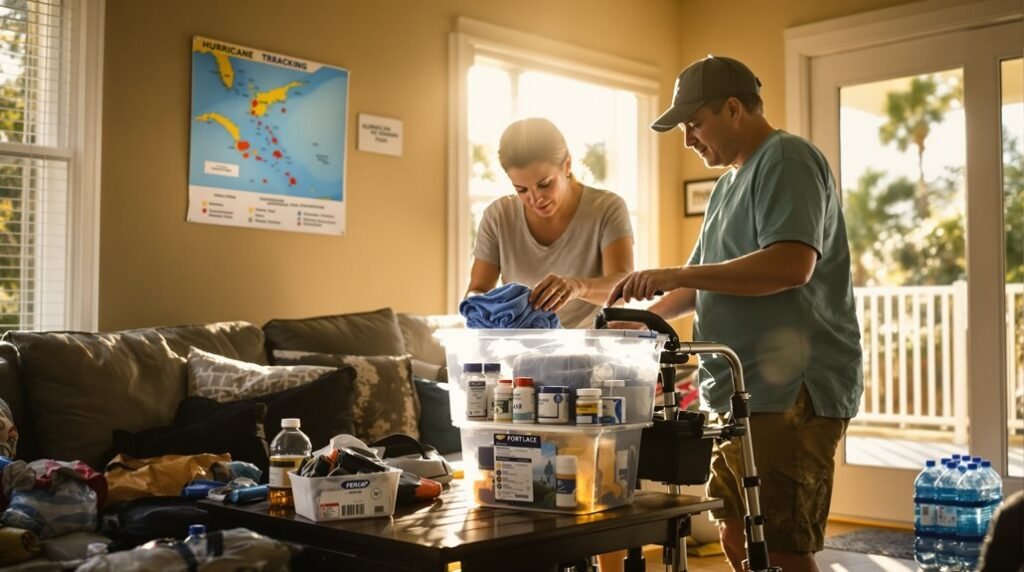
If you’re living with MS in South Florida, hurricane season creates layered medical risks that go beyond typical emergency planning. Mobility impairments complicate evacuation, cognitive dysfunction slows critical decisions, and power outages can disable essential mobility aids. You’ll also face disrupted medication access and increased relapse risk from stress. A strong preparedness plan addresses each of these vulnerabilities—and what follows covers everything you need to protect yourself before, during, and after a storm.
Why MS Makes Hurricane Season More Dangerous in South Florida
Living with MS in South Florida means hurricane season carries risks that go well beyond what the average resident faces.
Mobility impairments can make evacuation difficult, while cognitive dysfunction slows critical decision-making when time is limited.
When seconds matter most, MS-related cognitive dysfunction and mobility challenges can turn evacuation into a life-threatening obstacle.
Power outages disable essential mobility aids, leaving patients with MS without the support they need for basic daily functioning.
Psychological distress from severe weather can worsen existing symptoms and trigger new psychiatric conditions post-disaster.
Disrupted healthcare services further compound these dangers by cutting off access to medications and follow-up care.
Effective Emergency Preparedness requires understanding these compounding vulnerabilities.
Partnering with Emergency Management agencies gives patients with MS a stronger foundation for surviving hurricane season safely and protecting their long-term health.
How MS Cognitive Symptoms Complicate Emergency Decisions
When a hurricane threatens South Florida, MS-related cognitive symptoms can transform manageable decisions into overwhelming obstacles. Cognitive dysfunction impairs memory and processing speed, making it difficult to recall emergency plans or evacuation routes under pressure.
Compromised decision-making can delay your response to evacuation orders, increasing your exposure to danger. Communication barriers, including speech disorders, complicate your ability to request evacuation assistance from emergency responders or shelter staff.
Meanwhile, emotional stress triggered by an approaching storm can intensify existing cognitive symptoms, further narrowing your capacity to act decisively. Reduced external cues during storms also heighten disorientation and confusion.
Recognizing these vulnerabilities in advance allows you to implement compensatory strategies—written checklists, designated advocates, and pre-established communication protocols—before cognitive demands become unmanageable during an actual emergency.
Your MS Emergency Kit: What to Pack Before a Storm
Preparation is your most effective defense against the chaos a hurricane introduces into MS management. Your Disaster Supply Kit should address your neurological, mobility, and nutritional needs simultaneously.
Pack a minimum seven-day supply of medication, as Emergency conditions frequently disrupt pharmacy access. Include a manual wheelchair if power outages compromise your electric mobility device.
Seven-day medication supplies and manual wheelchair backups safeguard your independence when hurricanes disrupt pharmacy access and power.
Store non-perishable food and bottled water sufficient for three days, accounting for any caregivers supporting you.
Assemble a first aid kit containing supplies specific to cognitive or communication impairments, ensuring caregivers can respond accurately during a crisis.
Seal all medical documents, including prescriptions and health records, in a waterproof container. These records enable providers to continue your care seamlessly when displacement separates you from your regular treatment team.
How Power Outages Threaten MS Mobility Devices
During a hurricane, power outages can disable your electric wheelchair or scooter, stripping away the independence you rely on to navigate safely.
For MS patients, losing power means losing access to charged mobility devices, creating immediate safety risks and potential health crises.
Prolonged outages during hurricane season can also delay access to essential medical care, compounding the dangers you already face.
That’s why storm preparedness must include a backup plan for mobility. The University of Miami recommends keeping a standard manual wheelchair available in case power fails.
Don’t wait until a storm threatens to address this vulnerability.
Proactively maintaining backup mobility devices guarantees you can move safely, access support services, and protect your health when the power goes out.
Medication Storage and Backup Plans During a Hurricane
Everything you depend on to manage your MS—your medications, your routines, your stability—can be disrupted in hours when a hurricane strikes.
Effective medication storage begins with waterproof containers protecting your essential supplies from flood damage. Maintain at least a seven-day supply, since power outages frequently disable pharmacies and delivery services.
For temperature-sensitive medications requiring refrigeration, backup power through a generator isn’t optional—it’s critical. Without it, you risk losing medications that are difficult to replace mid-disaster.
Your emergency plan should include a thorough written list of all medications, dosages, and prescribing physicians to accelerate resupply efforts post-storm.
Pill organizers simplify daily administration, and ensuring caregivers understand your disaster preparedness protocol guarantees continuity of care when you need it most.
How to Evacuate When MS Affects Your Mobility
Securing your medications is only part of your hurricane readiness—getting yourself out safely when MS affects your mobility demands equally deliberate planning.
Develop a detailed evacuation plan that addresses your specific mobility needs, including identifying accessible transportation options in advance. Pre-register for evacuation assistance programs that serve MS patients, particularly those offering special needs shelters, so support arrives promptly during emergencies.
Keep an evacuation chair accessible to maneuver stairs safely when elevators fail. Maintain a manual wheelchair as a backup when power outages disable motorized devices.
Don’t overlook your neighbors—engaging them beforehand creates a reliable support network for traversing chaotic evacuation environments. Proactive coordination across these areas guarantees you’re not making critical decisions under pressure when a hurricane threatens.
South Florida Special Needs Shelters and How MS Patients Register
South Florida’s designated special needs shelters offer MS patients a critical safety net when hurricanes force evacuation, providing accommodations for medical devices and support for mobility or cognitive impairments.
As someone guiding others through hurricane preparedness, I urge you to help MS patients understand that pre-registration is vital for securing evacuation assistance.
Registration isn’t automatic—MS patients must proactively contact their local health department or emergency management office to enroll before hurricane season begins.
Shelter locations and registration processes can change annually, so verifying current details each year is non-negotiable.
These shelters guarantee MS patients receive appropriate medical care during displacement, but only if they’re registered in advance.
Don’t wait until a storm threatens—early registration assures access when it matters most.
What to Discuss With Your Neurologist Before Hurricane Season
Before hurricane season begins, schedule a dedicated appointment with your neurologist to address disaster preparedness as a core clinical priority.
Discuss your specific mobility and cognitive challenges so your neurologist can tailor an individualized preparedness plan addressing your functional limitations.
Your neurologist needs to know your exact limitations—mobility, cognition, fatigue—to build a preparedness plan that actually works for you.
Request prescriptions ensuring your medications supply lasts at least seven days, covering potential evacuation delays or power outages affecting temperature-sensitive treatments.
Ask your neurologist how disaster-related stress may trigger MS relapses and develop evidence-based strategies to mitigate these risks.
Review your evacuation plan explicitly, including transportation access and special needs shelter registration, ensuring your neurologist documents these details clinically.
Finally, establish robust support networks by identifying caregivers who understand your MS-specific needs, guaranteeing adequate assistance throughout any emergency situation.
MS Relapse Risks and Care Gaps to Address After a Hurricane
After a hurricane, you’ll face a convergence of stressors that can greatly elevate your MS relapse risks, including disrupted medication access, physical exhaustion, and acute psychological stress.
Care gaps emerge quickly when health systems are overwhelmed, leaving you without access to follow-up care precisely when you need it most.
Power outages compromise mobility aids, worsening existing mobility issues and increasing injury risk during recovery.
Cognitive impairments may further delay protective decisions, compounding your vulnerability.
Shelters rarely meet specialized medical needs, creating dangerous lapses in daily care assistance.
Effective hurricane preparedness must consequently extend beyond the storm itself—proactively identify backup neurologists, secure medication supplies, and register with local emergency services that prioritize medically complex individuals to minimize these post-hurricane care gaps.
Frequently Asked Questions
What Are the 5 P’s of Disaster?
The 5 P’s of disaster preparedness are Plan, Prepare, Practice, Protect, and Participate.
I’ll walk you through each one: you’ll develop evacuation routes and communication strategies, assemble a seven-day supply kit with medications and mobility equipment, conduct regular drills with caregivers, secure your home while keeping devices charged, and engage with local support networks and special needs shelters to guarantee you’re never maneuvering through an emergency alone.
What Should You Stock up on Before a Hurricane?
Before a hurricane, you’ll want to stock up like you’re preparing for a long voyage at sea — gathering everything you’ll need to weather the storm independently.
Stock at least seven days of non-perishable food and bottled water. Include your prescription medications, mobility aids, and a first aid kit.
Don’t forget waterproofed medical documents and a battery-operated weather radio to stay informed when electricity fails.
What Is the Safest Place in Florida to Avoid Hurricanes?
If you’re looking for the safest areas in Florida to avoid hurricanes, I’d recommend considering inland northern regions like Lake City, Gainesville, or Ocala.
These areas experience fewer direct hurricane impacts, have lower storm surge risks, and face reduced flooding threats due to higher elevations. The Florida Department of Emergency Management recognizes these inland counties as comparatively safer zones.
They’re also less congested during evacuations, which is particularly important if you require medical assistance during emergencies.
What’s the Worst Month for Hurricane Season in Florida?
September is the month you’ll want to mark on your calendar — it’s Florida’s most dangerous hurricane month.
I’ve found that nearly 40% of all U.S. mainland hurricane strikes since 1851 occur this month. Sea surface temperatures peak around 86°F, fueling storm development.
Averaging 3.4 named storms, September demands your complete preparedness plan finalized by early September.
For MS patients, having medications, cooling supplies, and evacuation routes ready before peak activity is absolutely critical.